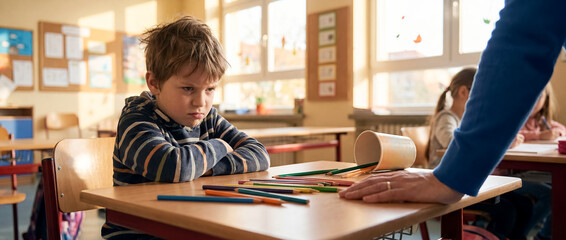
School refusal in children is more than occasional reluctance to attend school. It describes a pattern in which a child experiences significant difficulty attending or remaining at school, often because of emotional distress, fear, anxiety, or other underlying challenges.
Some children become distressed when separating from their parents. Others worry about schoolwork, friendships, bullying, or making mistakes in front of classmates. In some cases, physical symptoms such as headaches, nausea, and stomach pain make school attendance even more difficult.
Understanding why a child is avoiding school is the first step towards helping them. Instead of treating the behaviour simply as disobedience, parents can work with their child, teachers, and healthcare professionals to identify the underlying problem and develop a practical plan.
In this guide, we explain the common causes and warning signs of school refusal, how it differs from ordinary school reluctance, and what parents can do to support their child’s emotional well-being and return to regular attendance.
What Is School Refusal in Children?
School refusal occurs when a child has persistent difficulty attending school or staying there because of emotional distress or related difficulties. The child may become upset before school, resist leaving home, repeatedly ask to stay with a parent, or request to be collected early.
School refusal is not a standalone mental health diagnosis. Instead, it is a description of a behaviour that may be associated with anxiety, emotional difficulties, learning challenges, social problems, physical illness, or other circumstances.
Children experiencing school refusal are not necessarily trying to avoid responsibility. They may genuinely feel frightened, overwhelmed, embarrassed, or physically unwell.
For example, a child who experiences intense worry about separating from a parent may become distressed every morning. Another child may attend school willingly until experiencing bullying or struggling with a particular subject, after which attendance becomes increasingly difficult.
Understanding the individual circumstances matters because the right support depends on what is causing the problem. Parents who notice persistent changes in their child’s behaviour can explore child psychology services to better understand their child’s emotional and developmental needs.
What Are the Common Signs of School Refusal in Children?
School refusal can develop gradually or appear after a particular event. Recognising the early warning signs can help parents address difficulties before the pattern becomes more established.
1. Frequent Complaints of Physical Symptoms
Some children experience genuine physical discomfort when they feel anxious or overwhelmed.
Common complaints include:
- Stomach pain or nausea before school
- Headaches on school mornings
- Dizziness or feeling shaky
- Changes in appetite
- Vomiting in some cases
- Difficulty sleeping before school days
These symptoms may improve when the child stays home and return when school attendance approaches.
However, parents should not assume that physical symptoms are caused by anxiety. Persistent, severe, or new symptoms deserve appropriate medical assessment, particularly if they occur outside school-related situations as well.
2. Crying, Clinging, or Becoming Upset Before School
A child may cry, cling to a parent, refuse to get dressed, or become extremely distressed when it is time to leave home.
Younger children may repeatedly ask whether their parents will return to collect them. Older children may express fear about what could happen during the school day.
These reactions can be especially noticeable after school holidays, a school change, or a period of illness.
When distress is persistent, it may be helpful to explore whether separation anxiety in children may be contributing to the problem.
3. Repeated Requests to Stay Home
A child may frequently ask to stay home, complain about having to attend school, or insist that they cannot manage the day.
Parents might hear statements such as:
- “I don’t want to go to school.”
- “My stomach hurts whenever I have to go.”
- “Something bad will happen if I leave you.”
- “Everyone will laugh at me.”
- “I can’t do the work.”
These statements can provide valuable clues about the child’s concerns.
Rather than immediately dismissing them, parents should ask calm, open-ended questions to understand what feels difficult.
4. Difficulty Sleeping or Increased Worry
School-related distress may begin the night before attendance.
Children may struggle to fall asleep, repeatedly ask questions about the next day, or worry about tests, teachers, classmates, or being away from home.
Some children may also become unusually irritable or tearful during the evening.
When worry becomes persistent and interferes with everyday activities, parents can explore whether anxiety in children may be contributing to the problem.
5. Refusing to Enter or Remain at School
Some children reach the school entrance but cannot bring themselves to enter the building.
Others enter the classroom but repeatedly visit the school nurse, ask to call their parents, or request to go home.
These behaviours may reflect genuine distress rather than an attempt to manipulate adults.
The school should work with the family to understand what happens before, during, and after the child’s distress, including whether particular lessons, locations, people, or activities trigger it.
Why Do Children Refuse to Go to School?
There is rarely one explanation that applies to every child. School refusal may develop because of a single stressful event, several overlapping difficulties, or a problem that has gradually become harder to manage.
Identifying the underlying cause helps parents choose a response that addresses the child’s actual needs.
1. Separation Anxiety
Some children experience intense fear when they have to separate from a parent or another trusted caregiver.
They may worry that something bad will happen to their family while they are at school. Others fear that their parents will not return to collect them.
This type of distress may be particularly noticeable in younger children, although older children can experience separation-related anxiety too.
Parents can reassure their child that they will return, establish predictable goodbye routines, and gradually support age-appropriate independence.
If separation-related distress is persistent or significantly interferes with school attendance, professional assessment may help identify the most appropriate support.
2. Academic Pressure and Fear of Failure
School can become overwhelming when children believe they must achieve perfect results or fear disappointing their parents and teachers.
A child may avoid school because they are struggling with reading, mathematics, homework, tests, or classroom participation.
Some children become embarrassed when they cannot complete tasks as quickly as their classmates. Others fear being criticised for making mistakes.
Parents can help by focusing on effort and progress rather than perfection. Speaking with teachers about academic difficulties can also help determine whether additional learning support is needed.
If the child has persistent difficulties with attention, organisation, reading, or completing classroom tasks, a professional assessment may help clarify whether additional developmental or educational support would be beneficial.
3. Bullying and Friendship Problems
Relationships with classmates can strongly influence how safe a child feels at school.
A child may begin avoiding school after experiencing bullying, exclusion, teasing, online harassment, or repeated conflict with peers.
Sometimes, children struggle to explain what is happening because they feel embarrassed or fear that reporting the problem will make it worse.
Parents should ask about friendships and social experiences without assuming that the child is exaggerating.
If bullying is suspected, contact the school and request a clear plan to protect the child and monitor the situation. The child should know that adults will take their concerns seriously.
Returning to school is unlikely to become easier if the underlying safety problem remains unresolved.
4. Social Anxiety and Fear of Being Judged
Some children worry excessively about speaking in class, answering questions, eating in front of classmates, or participating in group activities.
They may fear blushing, making mistakes, being laughed at, or attracting unwanted attention.
As a result, ordinary classroom activities can feel threatening.
Children experiencing social anxiety may prefer to remain at home because it allows them to avoid situations that trigger their fears. Although staying home can provide temporary relief, repeated avoidance may make returning to school more difficult over time.
Parents can support their child by acknowledging their fears, avoiding criticism, and working with teachers or a qualified mental health professional to build confidence gradually.
5. Changes at Home or School
Major changes can affect a child’s sense of security.
Examples include:
- Starting at a new school
- Moving to another city or country
- Changing teachers or classrooms
- Experiencing parental separation
- Losing a loved one
- Recovering from a significant illness
- Adjusting after a long school holiday
A child may struggle to explain why these changes feel difficult. Instead, their distress may appear as irritability, physical complaints, or refusal to attend school.
Maintaining predictable routines and providing opportunities to discuss changes can help children feel more secure.
6. Learning Difficulties or Additional Support Needs
Children may avoid school when the classroom environment does not adequately support their learning or developmental needs.
For example, a child may struggle with reading, following instructions, managing sensory distractions, or keeping up with classroom activities.
These difficulties can contribute to frustration, embarrassment, exhaustion, or fear of making mistakes.
Parents should discuss recurring concerns with teachers and consider an appropriate assessment when learning or developmental difficulties are suspected.
The aim is not to label the child unnecessarily. It is to understand what makes learning difficult and identify reasonable adjustments or additional support.
7. Physical Health Problems
Not every child who avoids school is experiencing a psychological difficulty.
Recurring headaches, stomach pain, sleep problems, chronic health conditions, and other medical concerns can interfere with attendance.
Some children may also have genuine health symptoms that become more noticeable during stressful periods.
A healthcare professional can help determine whether a physical condition is contributing to the problem and whether further investigation is needed.
Parents should take physical complaints seriously rather than assuming that the child is pretending to be ill.
School Refusal vs Normal School Reluctance: What Is the Difference?
Many children occasionally complain about school. They may dislike waking up early, feel disappointed about missing a family activity, or feel nervous before an exam.
These experiences do not necessarily indicate school refusal.
The difference often lies in the intensity, persistence, and impact of the child’s distress.
| Feature | Normal School Reluctance | Possible School Refusal |
|---|---|---|
| Frequency | Occasional complaints | Repeated or persistent difficulty attending |
| Emotional response | Mild frustration or temporary disappointment | Significant anxiety, fear, crying, or distress |
| Physical symptoms | Usually absent or occasional | May include recurring headaches, nausea, or stomach pain |
| Effect on attendance | Usually attends school | May miss school, arrive late, or leave early |
| Impact on daily life | Limited disruption | May affect family routines, learning, and friendships |
| Response to support | Often improves with routine and reassurance | May require coordinated support and professional assessment |
These differences are general indicators rather than diagnostic criteria. A child does not need to miss school for an extended period before their distress deserves attention.
If school-related fear is intense, recurring, or interfering with daily life, parents should seek support early.
How Can Parents Help a Child Who Refuses to Go to School?
Supporting a child with school refusal requires a balance of empathy, practical problem-solving, and consistent expectations.
The goal is to understand the difficulty, address genuine barriers, and help the child return to a manageable school routine.
1. Listen Without Judging
Start by creating a calm opportunity for your child to explain what is happening.
Instead of saying, “You’re making excuses,” try asking:
- “What is the hardest part of going to school?”
- “When do you start feeling worried?”
- “Is there anything at school that makes you feel unsafe?”
- “What would make tomorrow a little easier?”
Give your child time to respond. Some children find it easier to talk while walking, drawing, or doing another relaxed activity.
Avoid pressuring them to explain everything immediately. They may need several conversations before they feel comfortable sharing their concerns.
Listening does not mean agreeing that staying home is always the best solution. It means understanding the problem before deciding how to respond.
2. Validate Their Feelings Without Reinforcing Avoidance
Children benefit from knowing that their feelings are taken seriously.
You might say, “I can see that going to school feels difficult right now. Let’s work out what is making it hard and how we can help.”
This acknowledges the child’s distress without suggesting that school is dangerous or impossible to manage.
When staying home becomes the automatic response to every episode of anxiety, the child may receive immediate relief but have fewer opportunities to learn that they can cope with difficult situations.
However, parents should not force a child into a situation where there is a genuine safety concern, untreated medical problem, or other serious barrier.
The right approach is to understand the reason for the refusal and create an appropriate plan with the school and relevant professionals.
3. Establish a Predictable Morning Routine
Uncertainty and rushing can increase stress for children who already find school attendance difficult.
A predictable routine can make mornings more manageable.
Consider the following steps:
- Prepare school clothes, bags, and lunch the night before.
- Set a consistent bedtime and wake-up time.
- Allow enough time for breakfast and getting ready.
- Keep instructions simple and calm.
- Use a visual checklist for younger children.
- Establish a brief, reassuring goodbye routine.
Try to avoid lengthy negotiations or repeated discussions about whether the child will attend school each morning.
Instead, explain the plan in advance and provide reassurance that you will help them manage the difficult feelings.
4. Work With the School to Identify the Problem
Parents do not need to solve school refusal alone.
Teachers, school counsellors, pastoral staff, and other appropriate school professionals can help identify difficulties that may not be visible at home.
Arrange a meeting to discuss:
- When the attendance difficulties began
- Whether a particular lesson or activity causes distress
- Any friendship problems or bullying concerns
- Academic challenges
- The child’s behaviour after arriving at school
- Possible adjustments during the return to regular attendance
Depending on the child’s needs, temporary support might include a trusted staff member meeting them at the entrance, a clear arrival routine, a safe place to seek help, or additional academic assistance.
Any plan should be practical, reviewed regularly, and designed to help the child participate in school as consistently as they can safely manage.
5. Help Your Child Return Gradually When Appropriate
Some children find it difficult to return to full school attendance after a period of significant distress.
In such cases, the family and school may agree on a structured, gradual return plan.
For example, the plan may begin with support at the school entrance or a short period in a familiar classroom before building towards a fuller school day.
The pace should reflect the child’s needs, the reason for the refusal, and any relevant clinical advice.
Gradual exposure can be useful when anxiety is a major factor, but it should not become an indefinite arrangement that prevents the child from progressing. The plan should include clear, achievable steps and regular reviews.
If the child is experiencing bullying, medical illness, or an unsafe school environment, those concerns must be addressed rather than treating attendance alone as the solution.
6. Recognise Effort and Small Improvements
Returning to school may feel challenging even when a child is making progress.
Recognise practical steps such as getting dressed on time, entering the school building, speaking with a teacher, or staying for an agreed period.
Use encouragement that focuses on effort rather than demanding that the child stop feeling anxious.
For example, you might say, “You felt worried this morning, but you followed the plan and spoke to your teacher. That was a positive step.”
Avoid comparing the child with siblings or classmates. Such comparisons can increase shame and make it harder for them to discuss their concerns.
7. Avoid Punishment, Threats, and Excessive Reassurance
Punishing a child for feeling anxious can increase distress and damage trust.
At the same time, repeatedly changing the attendance plan in response to every anxious thought may unintentionally reinforce avoidance.
Parents should aim for calm, consistent responses that acknowledge the child’s feelings while supporting achievable steps towards school attendance.
If the child becomes extremely distressed, take the situation seriously and seek guidance rather than escalating the conflict.
For persistent difficulties, a child psychologist can help the family understand the behaviour and develop a tailored support plan.
When Should Parents Seek Professional Help?
It is sensible to seek professional advice when school refusal is persistent, repeatedly disrupts attendance, or causes significant emotional distress.
You do not need to wait until the child has missed many school days before asking for help.
Consider arranging an assessment if your child:
- Frequently refuses or struggles to attend school.
- Experiences intense fear or distress before school.
- Regularly reports physical symptoms associated with attendance.
- Shows significant changes in sleep, mood, appetite, or behaviour.
- Appears withdrawn or increasingly isolated from friends.
- Reports bullying, feeling unsafe, or persistent conflict at school.
- Has learning difficulties that are affecting confidence and participation.
- Continues to struggle despite support from family and school.
A healthcare professional can assess physical symptoms and consider whether anxiety, separation-related distress, depression, learning difficulties, or other factors may be contributing.
Depending on the child’s needs, support may involve a paediatrician, child psychologist, mental health professional, school counsellor, or other appropriate specialist.
If your child experiences severe emotional distress, expresses thoughts of self-harm, or appears to be at immediate risk, seek urgent professional help.
How Can Child Psychology Support Help?
Child psychology support can help identify the emotional and behavioural factors contributing to school refusal.
Depending on the assessment, a professional may use approaches such as cognitive behavioural therapy (CBT), parent-focused strategies, gradual exposure to feared situations, or family and school collaboration.
For example, CBT may help a child recognise anxious thoughts, develop coping skills, and practise responding to challenging situations in manageable steps.
Parents can also learn how to respond consistently, encourage independence, and support progress without dismissing their child’s concerns.
The approach should be tailored to the child’s age, developmental needs, underlying difficulties, and circumstances.
Families looking for professional guidance can explore child psychology services at Snö Wellness to learn more about available support.
How Can Parents Prevent School Refusal From Becoming a Long-Term Problem?
Not every episode of school reluctance can be prevented. However, early support may help stop temporary difficulties from developing into a more persistent attendance problem.
Encourage Open Communication
Make it normal for your child to discuss worries about teachers, classmates, schoolwork, and friendships.
Listen without immediately correcting their feelings or offering solutions. Sometimes, children need to feel understood before they can consider practical steps.
Build Confidence and Independence
Encourage children to practise age-appropriate responsibilities, solve manageable problems, and develop relationships with trusted adults.
Small opportunities to make decisions and manage everyday challenges can help children develop confidence.
Maintain Healthy Daily Routines
Consistent sleep schedules, regular meals, physical activity, and time to relax can support children’s general well-being.
These habits do not replace treatment when a child has a significant anxiety or mental health problem, but they can contribute to a more predictable daily routine.
Address Problems at School Early
Take concerns about bullying, academic pressure, social exclusion, and classroom difficulties seriously.
Regular communication with teachers can help families identify problems before attendance becomes severely disrupted.
Seek Help Before the Problem Escalates
If your child repeatedly struggles to attend school, do not wait for the problem to resolve on its own.
Early conversations with school staff and healthcare professionals can help identify the cause and establish an appropriate plan.
Frequently Asked Questions About School Refusal in Children
1. Is School Refusal a Mental Health Disorder?
School refusal is not a standalone mental health diagnosis. It describes difficulty attending or remaining at school that may be associated with anxiety, emotional distress, bullying, learning difficulties, physical health problems, or other circumstances.
A professional assessment can help identify the underlying causes and determine what support is appropriate.
2. Can Anxiety Cause a Child to Refuse to Go to School?
Yes. Anxiety can contribute to school refusal, particularly when a child fears separation from parents, worries about social situations, or feels overwhelmed by schoolwork.
However, not every child who refuses school has an anxiety disorder. Parents and professionals should consider other emotional, medical, educational, and environmental factors.
3. Should I Force My Child to Go to School?
The answer depends on why the child is refusing.
If anxiety is contributing to avoidance, a calm and consistent plan that supports school attendance may be helpful. However, parents should first investigate possible bullying, medical illness, safety concerns, or other serious difficulties.
Avoid threats and physical force. Work with the school and appropriate professionals to develop a safe, realistic attendance plan.
4. Why Does My Child Complain of Stomach Pain Before School?
Stress and anxiety can cause genuine physical symptoms, including stomach discomfort, nausea, and headaches.
However, these symptoms can also have medical causes. If they are persistent, severe, unusual, or accompanied by other concerning symptoms, arrange a medical assessment rather than assuming they are caused by school anxiety.
5. Can School Refusal Be Linked to Bullying?
Yes. Bullying, peer conflict, social exclusion, and feeling unsafe can contribute to school avoidance.
Ask your child about their experiences and communicate with the school to investigate concerns. If bullying is occurring, the school should take appropriate steps to protect the child and address the behaviour.
6. How Long Does It Take for a Child to Overcome School Refusal?
There is no fixed timeline. Progress depends on the underlying cause, how long the problem has been present, the child’s individual needs, and the support available at home and school.
Some children improve relatively quickly with appropriate adjustments and consistent support. Others require a more structured plan and professional intervention.
7. When Should I Take My Child to a Child Psychologist?
Consider a child psychology assessment if your child repeatedly refuses school, experiences significant emotional distress, or continues to struggle despite support from family and school.
A professional can help identify contributing factors and recommend appropriate strategies.
If your child has severe physical symptoms, immediate safety concerns, or signs of a mental health emergency, seek the relevant urgent medical or emergency support.
Conclusion
School refusal in children can be worrying for parents, particularly when each school morning becomes a struggle.
However, repeated school avoidance is often a sign that something needs attention. Anxiety, separation difficulties, bullying, academic pressure, learning challenges, physical health problems, and changes at home or school can all contribute.
The most helpful first step is to understand what your child is experiencing rather than treating the behaviour as simple disobedience. Listen carefully, maintain predictable routines, communicate with teachers, and seek professional guidance when the problem persists.
With appropriate support, many children can develop healthier coping skills, rebuild confidence, and return to a more manageable school routine.
Need Support for Your Child?
If your child is struggling with school attendance, anxiety, or emotional difficulties, professional guidance can help you understand what is happening and identify appropriate next steps.
At Snö Wellness, our child psychology services can help families explore their child’s emotional and behavioural needs and discuss suitable support options.
Contact Snö Wellness to learn more about child psychology support and take the next step towards helping your child feel more confident and comfortable at school.
Medical disclaimer: This article is intended for general educational purposes and does not replace professional medical or psychological advice, diagnosis, or treatment. If you are concerned about your child’s physical health, emotional well-being, or safety, consult an appropriately qualified professional.