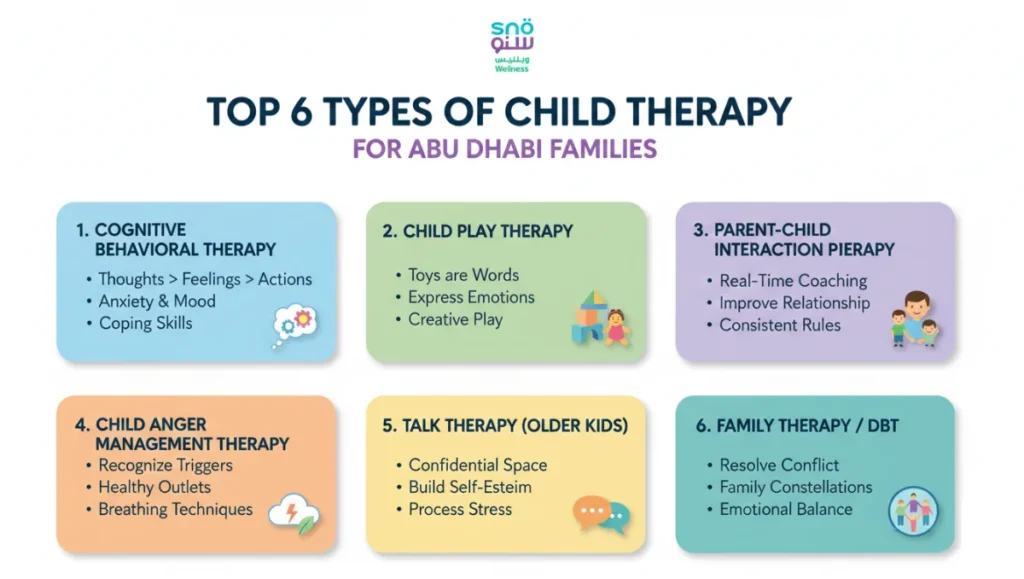
Why Specialized Support Matters for Abu Dhabi Families
Abu Dhabi is a vibrant, multicultural city with a fast-paced lifestyle. Children here often balance school, social activities, and cultural expectations. Sometimes, these pressures can lead to stress or behavioral changes. Identifying the right types of child therapy early can make a significant difference in a child’s long-term happiness. Specialized support provides children and adults via therapy with a safe space to express themselves. It also gives parents tools to foster a harmonious home environment.
Cognitive Behavioral Therapy
Cognitive Behavioral Therapy is one of the most common methods used today. It focuses on the link between thoughts, feelings, and actions.
How It Helps with Anxiety and Mood
Children often struggle to vocalize complex fears. This approach helps them identify “bossy thoughts” that cause worry. By changing these thoughts, they can change how they react to difficult situations. It is highly structured and goal-oriented, making it easy for kids to follow.
Building Practical Coping Skills
This method teaches children how to solve problems independently. They learn to face fears in small, manageable steps. In a busy city like Abu Dhabi, these skills help kids navigate social pressures at school. It builds a foundation of resilience that lasts into adulthood.
The Power of Child Play Therapy in Early Years
For younger children, toys are their words and play is their language. Child play therapy allows kids to communicate through a medium they understand best.
Expressing Emotions Through Creative Play
Younger children may not have the vocabulary for big emotions. In a playroom, they can act out scenarios using dolls, blocks, or art. This process helps them process trauma or big life changes in a natural way. It is a gentle yet profound way to see into a child’s inner world.
Strengthening the Emotional Bond
This method is not just about the child playing alone. It often involves the therapist guiding the child to find better ways to cope. Parents can learn a lot by observing how their child interacts with their environment. It creates a bridge of understanding between the parent and the child.
Parent Child Interaction Therapy
Sometimes, the best way to help a child is to work with the parent. Parent child interaction therapy focuses on improving the quality of the caregiver-child relationship.
Real-Time Coaching for Parents
In this setup, a professional often guides the parent through a headset. The parent interacts with the child while receiving live feedback. This helps the parent learn how to handle difficult behaviors calmly. It is very effective for children showing signs of defiance or aggression.
Establishing Consistent House Rules
Consistency is key to a child’s sense of security. This approach helps families in Abu Dhabi create clear boundaries. When a child knows what to expect, their anxiety levels often drop. This leads to fewer tantrums and a more peaceful household for everyone.
Child Anger Management Therapy
Anger is a natural emotion, but it can be overwhelming for a young mind. Child anger management therapy helps kids understand their triggers before they lose control.
Recognizing Physical Warning Signs
Kids are taught to notice when their bodies feel “hot” or “tight.” Recognizing these signs early allows them to use calming techniques. This might include deep breathing or counting to ten. Snö Wellness encourages these mindful practices to help children stay grounded.
Developing Healthy Outlets for Frustration
Instead of lashing out, children learn to use their words. They might also use physical outlets like sports or drawing to release energy. Teaching these habits early prevents behavioral issues from escalating as they grow older.
| Strategy | Goal | Benefit |
| Deep Breathing | Physical Calm | Lowers heart rate quickly |
| Emotion Charting | Self-Awareness | Helps identify specific triggers |
| Positive Self-Talk | Mental Reframing | Reduces feelings of helplessness |
Talk Therapy
As children enter their pre-teen and teenage years, verbal expression becomes vital. Talk therapy provides a confidential space for adolescents to discuss their lives.
Talk Therapy Examples in Daily Life
An adolescent might talk about school stress or friendship drama. Another might discuss their identity or future goals. These talk therapy examples show how diverse the conversations can be. It is about giving them a voice in a world that often talks at them.
Building Self-Esteem and Confidence
Teenagers in Abu Dhabi face unique social media and academic pressures. Having a neutral adult to talk to helps them process these influences. It builds self-regard and helps them make better choices. They learn that their feelings are valid and manageable.
Family Therapy
Healing often happens best when the whole family is involved. Family therapy looks at the dynamics between all members of the household.
Resolving Conflict Within the Home
Life in a modern city can sometimes lead to family members drifting apart. This method helps bring everyone back together. It improves communication and helps resolve long-standing arguments. It ensures that the home remains a sanctuary for the child.
Understanding Family Constellation Therapy
Family constellation therapy is a unique way to look at family history. It explores how past generations might influence current behaviors. By visualizing these connections, families can break negative patterns. It is a deep, insightful way to bring harmony to the entire lineage.
Advanced Methods: Dialectical Behavior Therapy
For children with intense emotional swings, Dialectical behavior therapy is very useful. It combines logic with emotional acceptance to create balance.
Balancing Acceptance and Change
The core idea is that a child can accept who they are while also striving to change behavior. This reduces the shame often felt by children with big emotions. It teaches “mindfulness” as a tool for daily life.
Skills for Emotional Regulation
Children learn how to survive a crisis without making it worse. They practice “distress tolerance” to get through tough moments. These skills are essential for older children facing high-pressure exams or social shifts. It empowers them to stay in control of their reactions.
Conclusion
Navigating the various types of child therapy is a journey of love and care. Every child in Abu Dhabi deserves to feel understood and supported. Whether it is through play, conversation, or family involvement, there is always a way to help a child thrive. At Snö Wellness, we value the health of the community and the strength of the family unit. Understanding these options is the first step toward a brighter, more resilient future for your little ones.
FAQ
What are the main types of child therapy available?
The most common options include play, talk, and behavioral methods. Each one focuses on different age groups and specific emotional needs. Professional guidance helps families choose the best path for their specific situation.
How do I know if my child needs therapy?
Look for lasting changes in sleep, appetite, or school performance. If a child seems unusually sad or angry for weeks, seek advice. Early support often leads to faster and more effective results for the child.
Can parents participate in the therapy sessions?
Yes, many methods involve parents to ensure the child feels supported. Collaborative approaches like family sessions or parent coaching are very common. This ensures that the lessons learned in session continue at home every day.
Is therapy for children a long-term commitment?
The duration depends entirely on the child’s unique needs and goals. Some families see progress in a few months, while others prefer ongoing support. The focus is always on the child’s well-being and progress.