Understanding Early Signs in the UAE
Abu Dhabi is a hub of international cuisines and diverse ingredients. This variety makes our meals exciting but requires extra care for young children. To identify food allergy in children, you must observe how they react to specific local and imported foods. Identifying these issues early ensures a happy, healthy childhood for every member of the family.
Common Triggers in Local Diets
Many families in the UAE enjoy traditional dishes rich in nuts, seeds, and dairy. Sesame is a common ingredient in local spreads and snacks. Seafood from the Arabian Gulf is also a staple in many households. These nutritious foods can sometimes cause unexpected reactions in sensitive systems. Parents should introduce these items one at a time to monitor responses effectively.
The Role of Environmental Factors
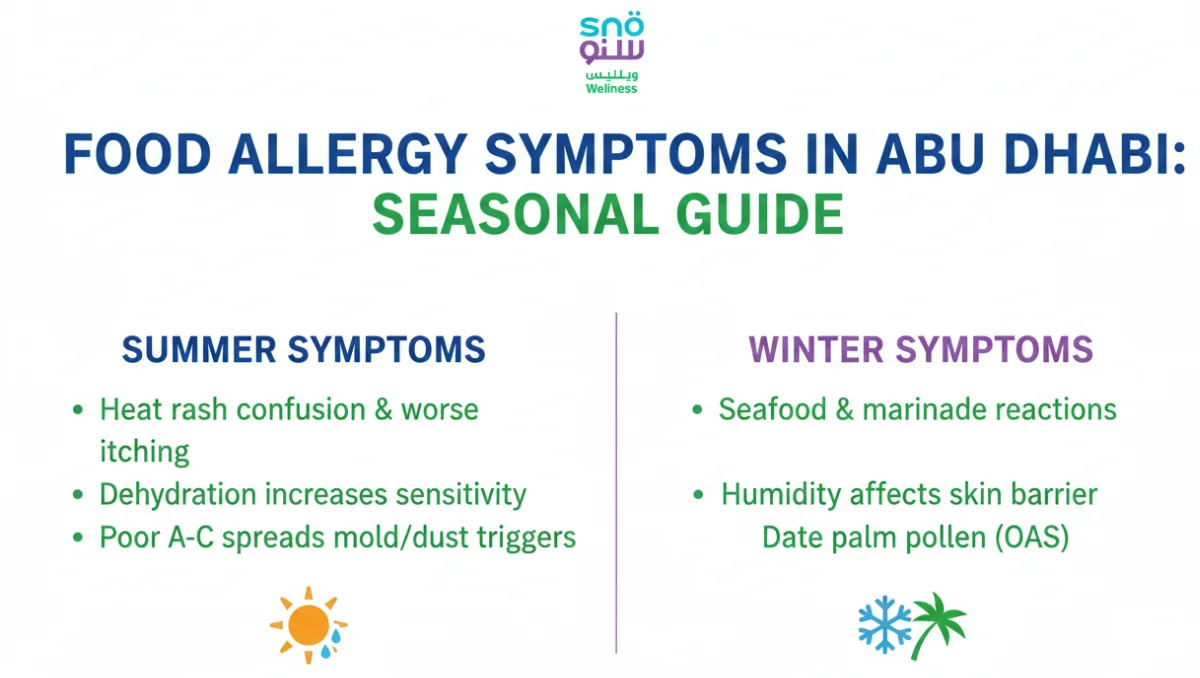
The unique climate in Abu Dhabi can influence how our skin and bodies react. High heat and humidity might mask or mimic certain mild allergic reactions. It is vital to distinguish between heat-related rashes and actual food sensitivities. Proper hydration and a cool environment help in making a clear observation of symptoms.
Recognizing the Physical Symptoms
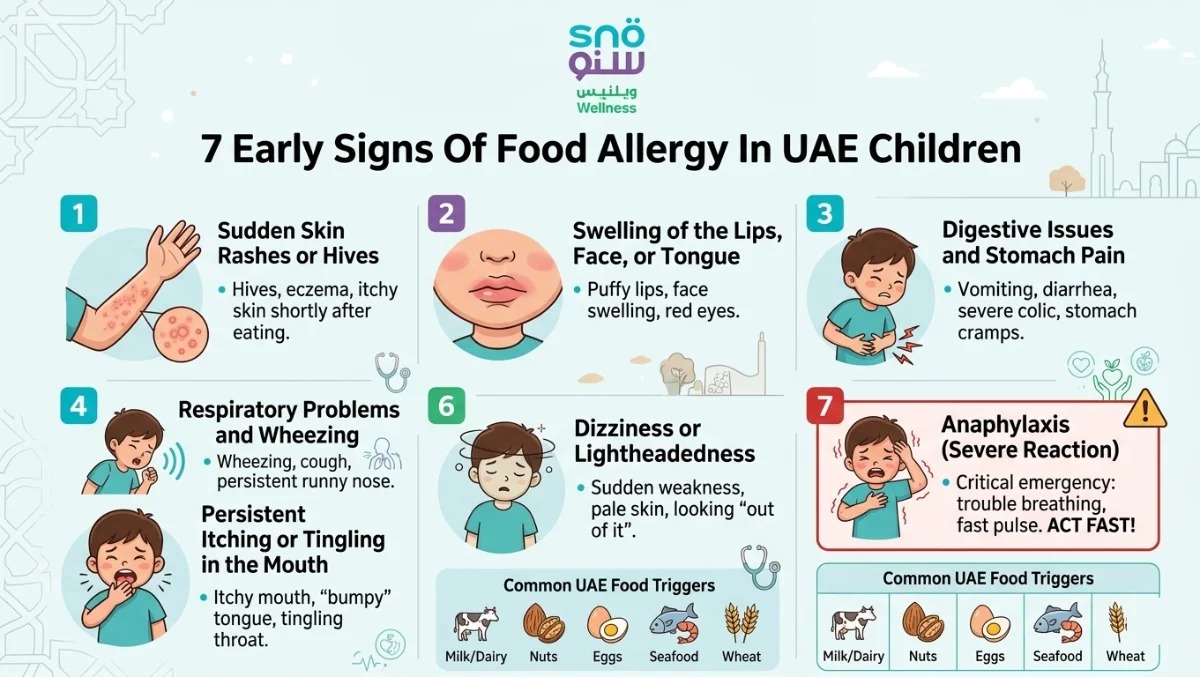
Knowing what to look for is the first step in protection. The identification of food allergy in children begins with a keen eye for physical changes. Most reactions occur within minutes of eating, though some may take longer. Staying calm and observant helps you provide the best care for your child.
Skin Reactions and Visible Changes
Skin issues are often the most common signs of a food sensitivity. You might notice red, itchy bumps known as hives on your child’s skin. Swelling around the lips, tongue, or face is a more serious indicator. Always check the skin after introducing a new ingredient to their daily diet.
Digestive Discomfort in Little Ones
Stomach issues can be tricky to decode in young kids. A child might complain of a tummy ache or experience sudden nausea. Vomiting or diarrhea shortly after a meal are strong signals to investigate further. Consistent digestive distress should never be ignored by a proactive parent.
| Symptom Type | Common Signs to Watch For |
| Skin | Hives, redness, swelling, or itchy rashes |
| Respiratory | Sneezing, coughing, or slight wheezing |
| Digestive | Nausea, stomach pain, or diarrhea |
| Behavioral | Sudden fussiness or refusal to eat |
Steps to Take at Home
Managing a household in Abu Dhabi involves careful planning and organization. When you try to identify food allergy in children, keeping a detailed record is your best tool. This habit provides a clear picture of your child’s health over time. It also helps when discussing your concerns with a specialist at Snö Wellness.
Maintain a Detailed Food Diary
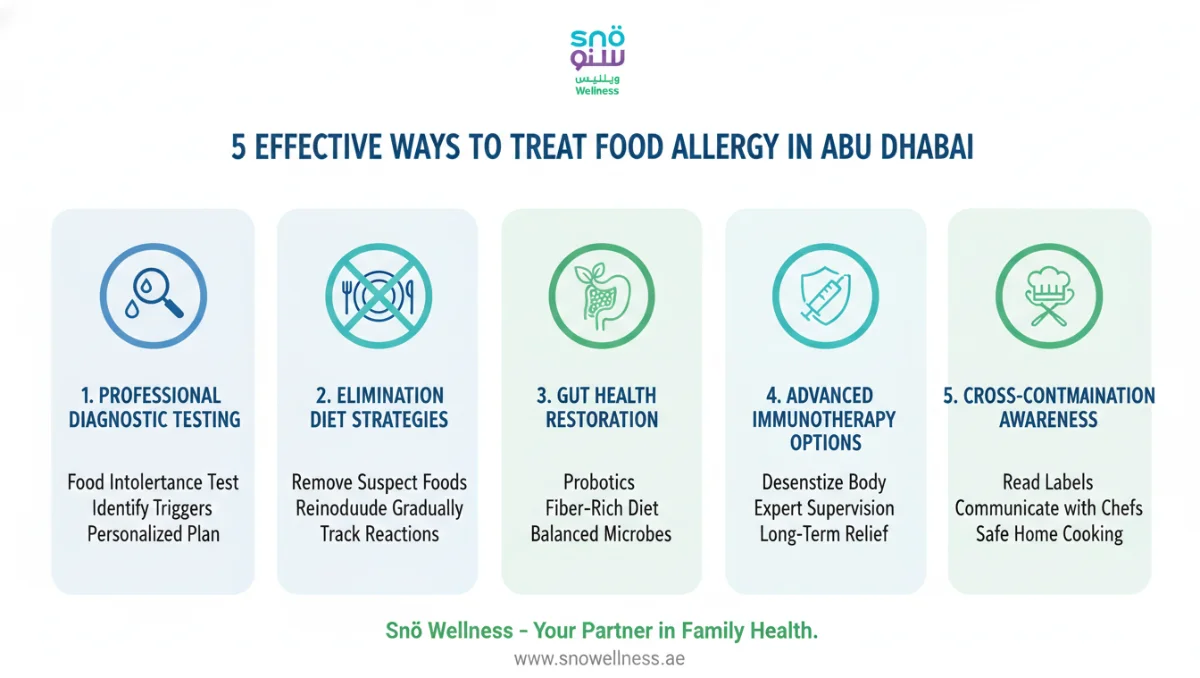
Write down everything your child eats for at least two weeks. Include the time of the meal and any physical changes you notice afterward. Note even the smallest details, like a slight cough or a mild patch of dry skin. This diary becomes a roadmap for understanding your child’s internal balance.
The Elimination Method Strategy
Under professional guidance, you might temporarily remove a suspected food from the diet. If the symptoms disappear, you have a strong clue about the cause. Reintroducing the food later must be done with extreme caution. This method requires patience and strict adherence to a clean eating plan.
Food Allergy Symptoms And Diagnosis
Gaining a clear Food Allergy Symptoms And Diagnosis is a collaborative journey between parents and health experts. Professionals use various tools to confirm which ingredients are causing trouble for your little one. These may include skin prick tests or specialized blood tests designed for children. Having a formal Food Allergy Symptoms And Diagnosis allows your family to live with confidence and peace of mind.
Navigating the School Environment
Schools in Abu Dhabi are very supportive of children with specific dietary needs. Once you identify food allergy in kids, communicate clearly with teachers and school nurses. Provide them with a written plan and list of safe foods for your child. This ensures your child stays safe during snack times and birthday celebrations.
Nutritional Balance for Your Child
Removing certain foods does not mean your child has to miss out on nutrients. Our region offers a vast array of healthy alternatives for every dietary restriction. Replacing dairy with calcium-rich greens or fortified milks is a great start. Focus on whole, fresh ingredients found in local organic markets across the city.
Safe Alternatives in Abu Dhabi
You can find many allergen-free products in major supermarkets throughout the UAE. Look for labels that clearly state “nut-free” or “gluten-free” while shopping. Using fresh fruits and vegetables as snacks is always a safe and healthy choice. Many local cafes now offer specialized menus for children with sensitive systems.
Importance of Fresh, Local Produce
Buying local produce reduces the risk of hidden additives often found in processed goods. The farmers’ markets in the UAE provide high-quality ingredients that are gentle on the stomach. Cooking at home gives you total control over what goes into your child’s body. This practice is a cornerstone of the holistic approach at Snö Wellness.
Long-Term Health and Wellness
Addressing sensitivities early sets the stage for a healthy adult life. As children grow, their bodies change, and some may even outgrow certain allergies. Continuous monitoring and regular check-ups are essential for tracking this progress. Your commitment to their well-being today builds a stronger foundation for their future.
Building a Support System
Connect with other parents in Abu Dhabi who are managing similar health journeys. Sharing tips on safe brands and recipes can make daily life much easier. A supportive community helps reduce the stress often associated with dietary restrictions. Remember, you are not alone in your quest to keep your family healthy.
Empowering Your Child
As your child gets older, teach them how to identify food allergy in children themselves. Help them understand which foods make them feel unwell in a positive way. Encourage them to ask about ingredients when eating away from home. This empowerment builds their confidence and ensures their safety as they gain independence.
FAQs
How can I tell if my child has a food allergy?
You can spot an allergy by watching for hives, swelling, or tummy pain after eating. Keep a food log to track reactions. Always consult a specialist for a professional health assessment.
What are the most common food allergies in children?
Milk, eggs, peanuts, and soy are very frequent triggers for young children. In the UAE, sesame and certain nuts are also common. Early detection is key to managing these sensitivities effectively.
Can a child suddenly develop a new food allergy?
Yes, allergies can appear at any age, even if the food was safe before. Changes in the environment or immune system may play a role. Stay observant during every new mealtime.
What is the difference between an allergy and intolerance?
An allergy involves the immune system and can be quite serious. An intolerance usually affects the digestive system and causes mild discomfort. Professional testing helps clarify which one your child is experiencing.