Understanding the Need for Calm in Local Homes
Abu Dhabi is a vibrant hub of culture and hard work. Many families balance busy school schedules and demanding professional lives. This pressure can lead to sudden outbursts or heated arguments between loved ones. When we lose our cool, our bodies react physically to the stress.
High stress levels can even impact our physical health over time. For instance, many people do not realize that chronic stress lead to hair loss if it is not managed well. Keeping a calm mind protects both your heart and your well-being. By using simple tools, you can lower the heat before a small disagreement turns into a major conflict.
Core De-escalation Techniques for Every Day
You do not need to be an expert to help someone calm down. These steps are designed to be used by parents, siblings, or caregivers. The goal is to move from a state of anger to a state of safety.
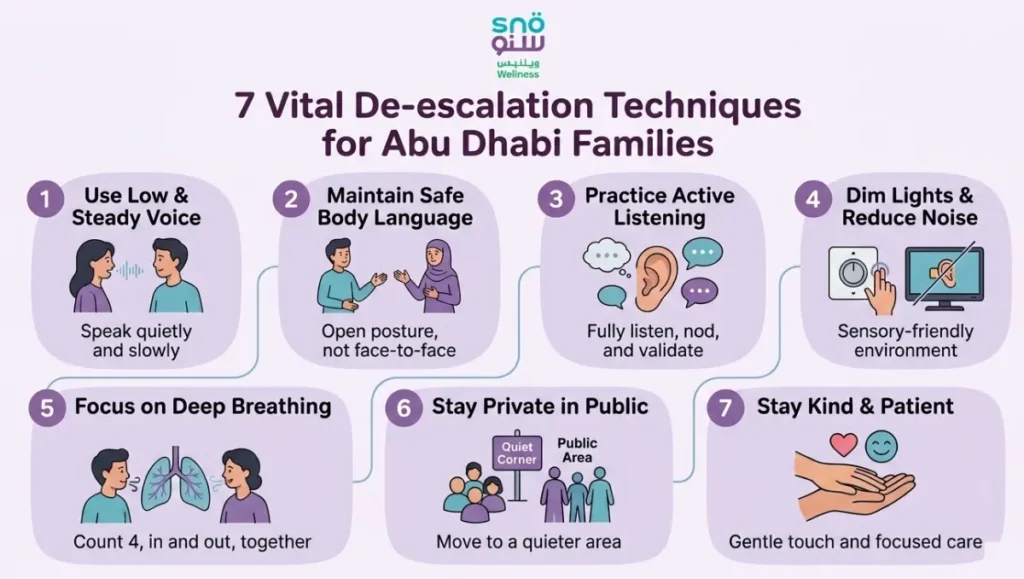
1. Use a Low and Steady Voice
When someone is shouting, our instinct is to shout back. This only makes the situation louder and scarier. Instead, try to speak in a very quiet and slow tone. This forces the other person to listen more closely. It also signals to their brain that there is no immediate danger.
2. Maintain Safe Body Language
Your body speaks louder than your words. Avoid crossing your arms or pointing your fingers. Stand at a slight angle rather than face-to-face. This feels less confrontational to a person who is upset. Keeping your hands visible and relaxed shows that you are there to help, not to fight.
3. Practice Active Listening
Most people shout because they feel they are not being heard. Stop what you are doing and give them your full attention. Nod your head and use short phrases like “I see” or “Tell me more.” This validates their feelings without necessarily agreeing with their actions.
Comparison of Calm vs. Aggressive Responses
| Feature | De-escalation Approach | Aggressive Approach |
| Tone of Voice | Soft, slow, and rhythmic | Loud, fast, and sharp |
| Eye Contact | Brief and gentle | Intense and staring |
| Posture | Open and relaxed | Tense and looming |
| Goal | Safety and understanding | Winning the argument |
Creating a Sensory-Friendly Environment
Our surroundings play a huge role in how we feel. Abu Dhabi homes can sometimes be bright and noisy. If a family member is struggling, try to reduce the sensory input in the room.
4. Dim the Lights and Reduce Noise
Bright lights can be irritating to a stressed brain. Turn off the television or loud music. If possible, move the conversation to a quieter part of the home. Snö Wellness suggests creating a “calm corner” in your house where family members can go to reset.
5. Focus on Deep Breathing Together
Breathing is a powerful tool to reset the nervous system. Ask the person to take a deep breath with you. Count to four as you breathe in, and count to four as you breathe out. This simple act can lower the heart rate almost instantly.
When to Seek Guidance for Family Wellness
Sometimes, even the best de-escalation techniques are not enough for deep-rooted issues. It is okay to ask for help when things feel too heavy to carry alone. In the UAE, there are many resources available for families who need extra support.
If you find that emotions are consistently hard to manage, consulting a psychiatrist in Abu Dhabi can provide a clearer path forward. These professionals help identify the underlying causes of frequent anger or anxiety. They offer medical and therapeutic insights that go beyond basic communication tips.
Professional support is a sign of strength, not weakness. It ensures that every family member gets the specific care they need to thrive. Whether it is a child struggling at school or an adult facing burnout, expert advice makes a difference.
Handling Stress in Public and Private Spaces
The way we handle stress in different settings matters. Abu Dhabi is a busy place, and conflicts often happen when we are out in the world.
6. Stay Private in Public Areas
It can be extra stressful when a conflict happens in a public mall or park. The pressure of others watching often makes us react more harshly. Move to a less crowded area if you can. This helps you both focus on the solution instead of bystanders.
7. Stay Kind and Patient
Choose to offer gentle touch if the person finds it comforting. Focus on the person in need rather than worrying about what strangers think. Keeping your focus entirely on their needs shows support and stops the situation from getting worse. Snö Wellness encourages families to use these de-escalation techniques with a warm heart.
The Link Between Emotions and Physical Health
Our minds and bodies are deeply connected. When we stay in a state of “fight or flight,” our hormones change. This can lead to sleep problems, skin issues, or digestion trouble. As mentioned before, the way stress lead to hair loss is a common physical sign of emotional strain.
By mastering the art of staying calm, you are investing in your long-term health. A peaceful home reduces the physical toll that conflict takes on everyone. Snö Wellness encourages families to look at health as a whole, combining mental peace with physical care.
Long-Term Benefits of Emotional Regulation
Using these tools consistently builds trust within the family. Children learn how to handle their own big feelings by watching you. This creates a cycle of peace that lasts for generations.
A healthy family is the foundation of a healthy society. In a city as forward-thinking as Abu Dhabi, we have the tools to lead the way in holistic wellness. Taking the time to listen and stay calm is the best gift you can give your family.
To explore more about mental health, speaking with a psychiatrist in abu dhabi can help you understand the science of behavior. Knowledge is the first step toward a more harmonious life.
Conclusion
Mastering de-escalation techniques is a journey that requires practice and patience. By choosing soft words, open body language, and active listening, you can protect your home from unnecessary conflict. These seven steps lead to big improvements in how we feel and interact every day. Snö Wellness remains dedicated to supporting the community through clear and helpful information. Keeping your family’s emotional health a priority is a beautiful way to ensure a bright and happy future in our wonderful city.
FAQs
How do I start de-escalating a heated argument?
Start by lowering your voice and taking a slow, deep breath. This helps calm your own nervous system first. Once you are calm, you can better help the other person find their peace.
What is the most important rule of de-escalation?
The most important rule is to ensure everyone stays safe. If a situation becomes dangerous, give everyone space. Never try to force a conversation when emotions are at their highest point.
Can children learn de-escalating techniques at a young age?
Yes, even young children can learn to recognize when they feel “red” or “hot.” Teaching them to use “I feel” statements is very helpful. They can also learn simple breathing exercises to use at school.
Why is active listening so effective for calming people?
Active listening works because it meets a basic human need to be understood. When someone feels heard, their brain stops sending emergency signals. This allows them to start thinking logically again rather than just reacting.