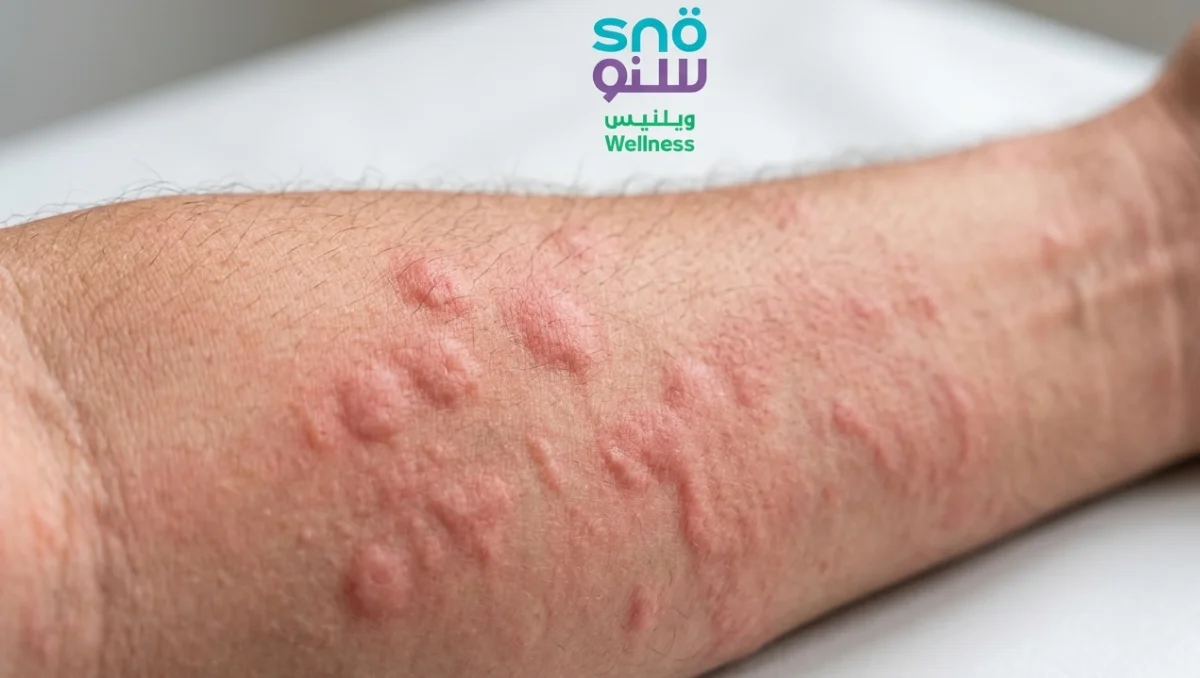
Food allergies affect children and adults, but young children face more challenges because their immune system is still developing. The climate, eating habits, and diverse cuisines in Abu Dhabi all play a role. Families often mix local, Asian, Western and Middle Eastern dishes at home. This gives children exposure to many foods at an early age, which can rise the chance of reactions.
This guide explores the most common food triggers in Abu Dhabi, why cases are rising, and how families can understand and manage them with confidence. These insights help residents stay aware and make informed decisions about daily meals.
Why Food Allergies Are Rising in Abu Dhabi
Food allergy cases continue to rise in Abu Dhabi each year. Many parents report reactions during early childhood. Some children outgrow these allergies, while others face long-term triggers.
Climate and Exposure Factors
The hot climate limits outdoor time for many families. Children often stay indoors more than usual, which may reduce exposure to natural microbes. This change in environment can affect immune system strength.
Diverse Food Culture
Families in Abu Dhabi enjoy dishes from many cultures. Children try new ingredients early, which can lead to reactions when the immune system see a food as a threat.
Family Medical History
Food allergies can run in families. If a parent has eczema, asthma or an allergy, the child may be at higher risk. Many families at Snow Wellness have shared this pattern.
Most Common Food Allergies in Abu Dhabi
The primary keyword common food allergies in Abu Dhabi appears here naturally because it reflects what many families want to learn about. These allergies often show up in early childhood and may continue into adulthood.
Milk Allergy
Milk allergy is common among infants and toddlers. It causes stomach pain, vomiting, hives or breathing trouble. Some children react to both dairy milk and products made with milk, which makes daily meals tricky at times.
Egg Allergy
Egg allergy often appears in early childhood. Children may react to the egg white, the yolk or both. Many parents report reactions after eating baked items that include eggs though they didn’t expect it.
Peanut and Tree Nut Allergy
Peanut and tree nut allergies are rising across Abu Dhabi. These reactions can be strong even with small amounts. Families need to read labels closely because nuts appear in many snacks and desserts.
Wheat Allergy
Wheat allergy is different from gluten intolerance. It can cause skin, breathing or stomach symptoms. Many common foods include wheat, which makes this allergy harder to manage in daily meals.
Seafood Allergy
Seafood allergy is common across coastal regions. In Abu Dhabi, families enjoy fish and shellfish dishes often. Children may react to shrimp, crab, lobster or fish proteins, and the signs can appear fast.
Table: Common Allergies and Typical Reactions
| Food Allergen | Common Symptoms | Age Group Most Affected |
| Milk | Hives, vomiting, stomach pain | Infants, toddlers |
| Eggs | Skin rash, coughing, swelling | Young children |
| Peanuts/Nuts | Swelling, breathing trouble | Children, teens |
| Wheat | Skin redness, stomach upset | All ages |
| Seafood | Breathing issues, hives | Older children, adults |
Signs of Food Allergies in Children
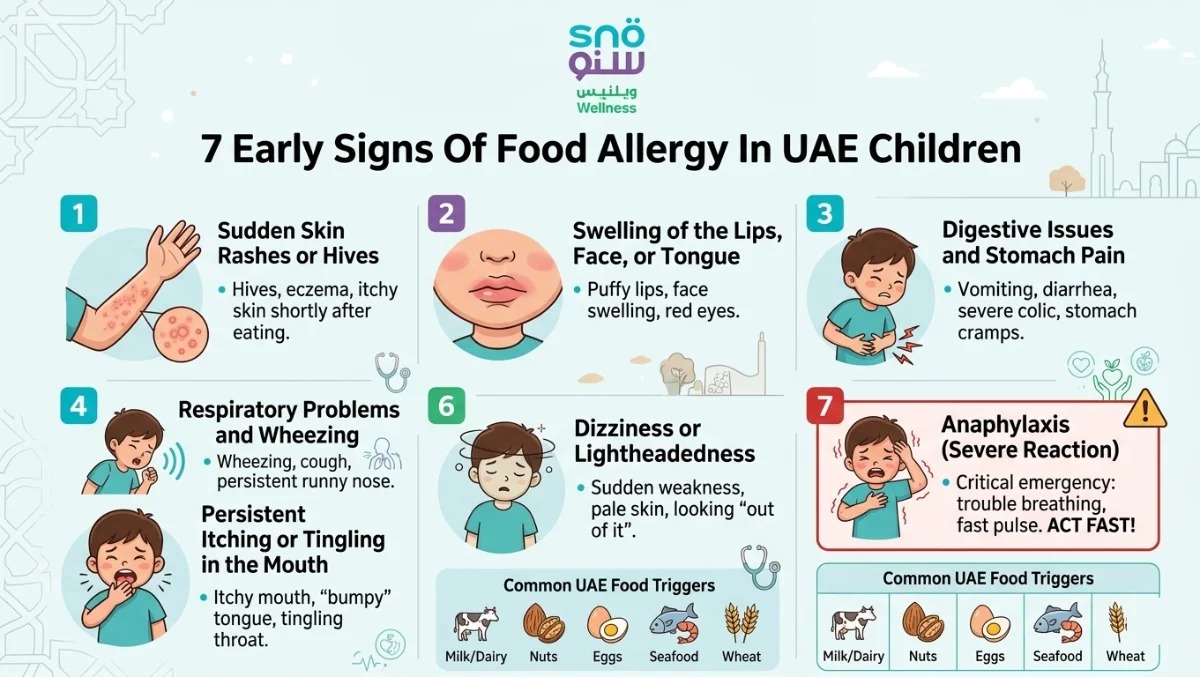
Families at Snow Wellness report many early signs that help detect food allergies. Spotting symptoms early helps prevent further reactions.
Skin Reactions
Skin may show redness, itching, swelling or hives soon after eating.
Breathing Symptoms
Some children cough, wheeze or have trouble breathing. These reactions can happen within minutes and should be taken seriously.
Stomach Problems
Nausea, vomiting and diarrhea are common stomach reactions. These symptoms may appear shortly after eating the trigger food.
Why Early Diagnosis Matters in Abu Dhabi
Abu Dhabi families live busy lives. Children attend schools, nurseries and community events where food is shared often. Early diagnosis helps families manage these spaces with confidence.
School Safety Needs
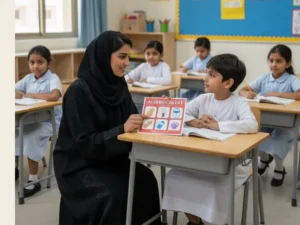
Early diagnosis helps children stay safer in Abu Dhabi schools where food is shared many times a day. Teachers need clear allergy details to avoid risky meals or snacks. When parents share the diagnosis early it guides staff on what signs to look for and how to respond. This reduces mistakes during events, lunch breaks or class parties. Many families feels calmer when school teams understand a child’s needs and follow simple steps.
Social Gatherings and Food Sharing
Social gatherings in Abu Dhabi often include large meals where kids try many dishes. Early diagnosis helps families protect children in these busy settings. When relatives and friends knows the allergy, they avoid unsafe foods and adjust dishes if needed. Children move between homes often, so this early awareness prevent confusion. Since food sharing is a big part of local culture, clear knowledge helps create safer spaces and reduces surprise reactions.
Travel and Dining Out
Families in Abu Dhabi travel often and visit restaurants with diverse menus. Early diagnosis helps parents guide staff about allergy needs before ordering food. Many dishes includes hidden ingredients, so knowing the child’s triggers helps avoid mistakes. This makes outings more relaxed for children who feel nervous around new meals. It also supports better planning during vacations or long drives, where options may be limited. Early detection gives families confidence across different places.
How Families Can Manage such Risks
Managing common food allergies in Abu Dhabi requires simple daily habits. Snow Wellness teaches families to build routines that keep children safe while still enjoying meals.
Label Reading
Many packaged foods include eggs, nuts or milk. Reading labels helps avoid hidden ingredients though it sometimes feels tiring for parents.
Safe Meal Prep
Families prepare separate tools or cooking areas for safe meals. This prevents cross-contact but needs consistency at home.
The Role of a Food Allergy Action Plan
If an allergy is diagnosed, have a plan. This plan details the allergen and symptoms. It explains what medication to give and when. Carry necessary medication, like an epinephrine auto-injector, at all times. All caregivers and school staff should know this plan.
Communicating share such plan With Caregivers
Parents share allergy plans with teachers, nannies and relatives. Simple guidance helps prevent accidental exposure.
Conclusion
Food allergies are part of daily life for many families in Abu Dhabi. Understanding triggers, early signs and safe routines helps children live healthier lives. These insights allow parents to make thoughtful choices at home, school and social events. Continued awareness supports a safer and more informed community for everyone.
FAQs
What are the most common food allergies in Abu Dhabi?
Common food allergies in Abu Dhabi include milk, eggs, peanuts, tree nuts, wheat and seafood. These allergens affect children and adults. Many reactions appear early in life and may continue into later years.
How do I know if my child has a food allergy?
Children may show hives, vomiting, swelling, coughing or stomach pain after eating certain foods. Symptoms often appear within minutes or hours. A doctor can confirm the allergy through tests even if signs seem unclear.
Are food allergies more common in children in Abu Dhabi?
Yes, many families report rising allergy cases in children. Climate, indoor lifestyle and diverse food exposure may contribute. Some children may outgrow allergies with time but many keep them longer.
Can food allergies be prevented?
Prevention is not always possible but early food introduction and good immune support may help. Families should watch for early signs. Regular checkups support early guidance.
What should I do during a food allergy reaction?
Stop the food right away and watch for symptoms. Mild reactions may fade but severe signs like trouble breathing need prompt medical help. Families should keep an action plan ready just in case.
Are schools in Abu Dhabi aware of food allergies?
Most schools follow safety steps for children with allergies. Parents should inform teachers and provide clear instructions. Simple plans help reduce daily risks and make children feel safe.